Optimizing Cross-Border Subscription Settlements Through Advanced Data Analytics
Dana Ludwig · Sep 25, 2026
Optimizing Cross-Border Subscription Settlements Through Advanced Data Analytics
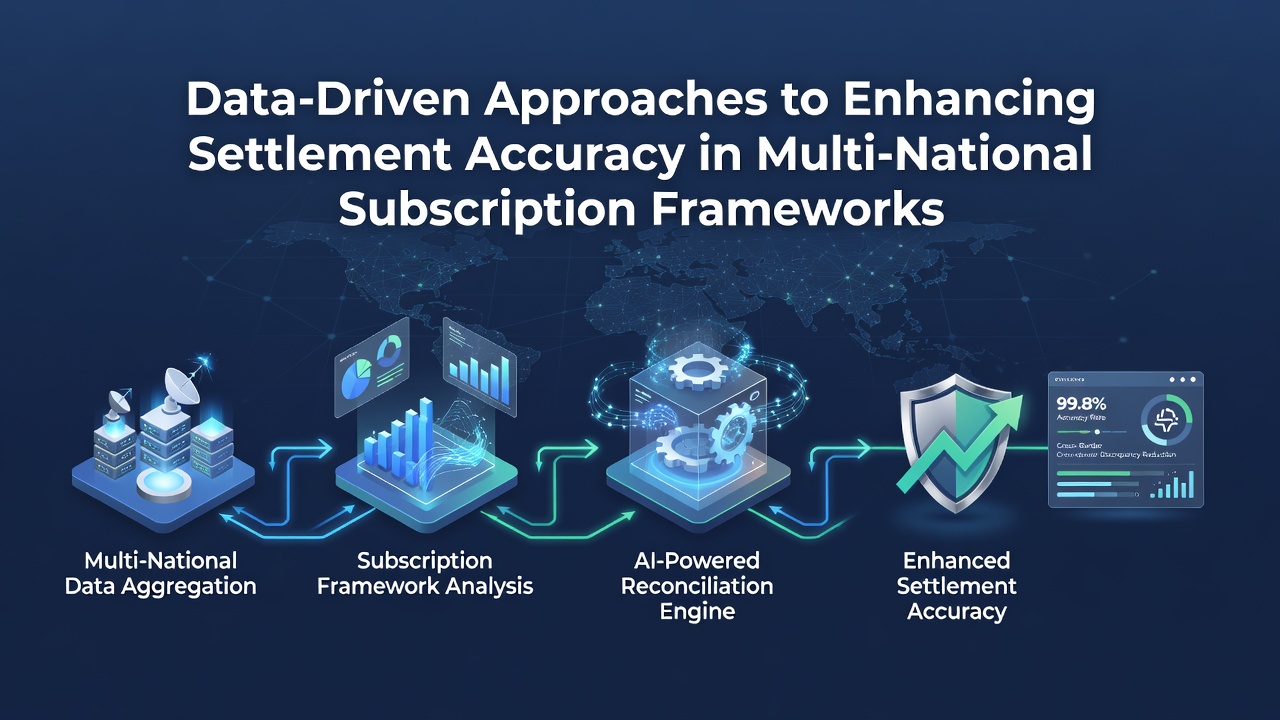
Global subscription services now handle billions in recurring revenue each year, yet settlement discrepancies still arise from currency fluctuations, regulatory differences, and fragmented data systems across borders. Companies operating in multiple countries rely on data analytics to align transaction records, reconcile accounts, and minimize errors that previously cost operators significant portions of their margins. These approaches combine real-time monitoring with historical pattern analysis to adjust for variables such as exchange rates and tax obligations before final payouts occur.
Core Components of Data-Driven Settlement Systems
Modern frameworks integrate data from payment processors, billing platforms, and banking partners into centralized repositories where algorithms standardize formats and flag inconsistencies immediately. Observers note that organizations adopting these unified datasets reduce reconciliation times by connecting disparate sources that once required manual review. Automated validation rules check every entry against compliance benchmarks set by bodies including the Bank for International Settlements, ensuring cross-border transfers meet reporting standards in regions from the European Union to the Asia-Pacific markets.
Real-time dashboards display settlement status across currencies and jurisdictions, allowing teams to intervene when thresholds for variance appear. This visibility proves especially useful during high-volume periods when subscription renewals spike simultaneously in different time zones. Data pipelines pull information continuously rather than in batches, cutting the lag that once allowed small discrepancies to compound into larger financial adjustments.
Application in Multi-National Environments
Subscription providers managing users across dozens of countries face unique challenges with tax withholding, local currency conversion, and reporting deadlines that vary by jurisdiction. Analytics tools apply weighted models to predict final settlement amounts based on current market data and regulatory updates, then compare projections against actual bank receipts. When deviations exceed defined limits, the system triggers detailed audits that trace the source back through each processing step.
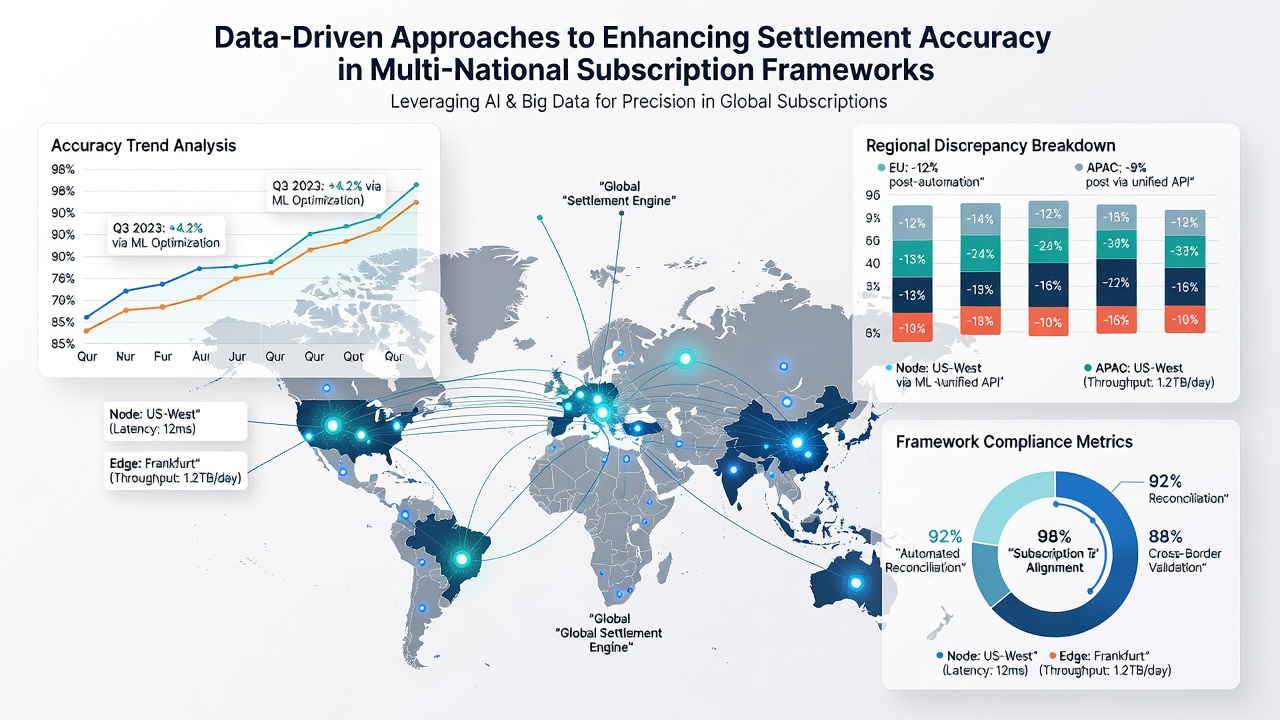
One documented case involved a streaming service that implemented predictive reconciliation across its European and North American operations; within six months the company recorded a measurable drop in post-settlement corrections. Similar implementations appear in software-as-a-service platforms serving enterprise clients who require detailed audit trails for their own financial reporting. These systems also incorporate feeds from central banks and currency markets to recalibrate conversion rates hourly, reducing exposure to volatility that peaks during economic announcements.
Integration With Existing Infrastructure
Legacy billing systems often operate in isolation, yet successful data-driven upgrades layer analytics engines on top without full replacement. Middleware solutions normalize incoming transaction logs into consistent schemas while preserving original identifiers for traceability. Teams configure alerts that activate when settlement accuracy metrics fall below benchmarks established through months of baseline measurement.
By September 2026, several regulatory updates scheduled for release in Canada and Australia are expected to emphasize enhanced data transparency in recurring payment ecosystems, prompting operators to accelerate adoption of these layered analytics approaches. Organizations already running pilot programs report smoother transitions because their existing datasets already meet the granularity requirements outlined in preliminary guidance documents.
Measuring Impact and Refining Models
Key performance indicators track settlement accuracy as a percentage of total volume, with breakdowns by region, currency pair, and subscription tier. Continuous model training incorporates new data points from each completed cycle, allowing algorithms to adapt to emerging patterns such as seasonal demand shifts or changes in consumer payment preferences. Research from academic institutions including the International Monetary Fund highlights how iterative refinement of these models correlates with lower operational overhead in high-volume environments.
Stakeholders review quarterly summaries that compare pre- and post-implementation figures, focusing on both error rates and the speed of resolution when issues surface. This evidence-based loop supports incremental improvements rather than wholesale system overhauls, keeping disruption minimal for ongoing subscription operations.
Conclusion
Data-driven methods continue to reshape how multi-national subscription frameworks achieve settlement precision by unifying fragmented information streams and applying targeted analytics at each stage of the process. As regulatory landscapes evolve and transaction volumes grow, organizations that maintain rigorous data integration practices position themselves to meet accuracy targets consistently across borders. The combination of real-time monitoring, predictive modeling, and ongoing model refinement delivers measurable reductions in discrepancies while supporting compliance with international standards.