Addressing Cross-Platform Integration Issues in Secure Recurring Payment Processing for E-Commerce
Zoe Schmitz · Sep 25, 2026
Addressing Cross-Platform Integration Issues in Secure Recurring Payment Processing for E-Commerce
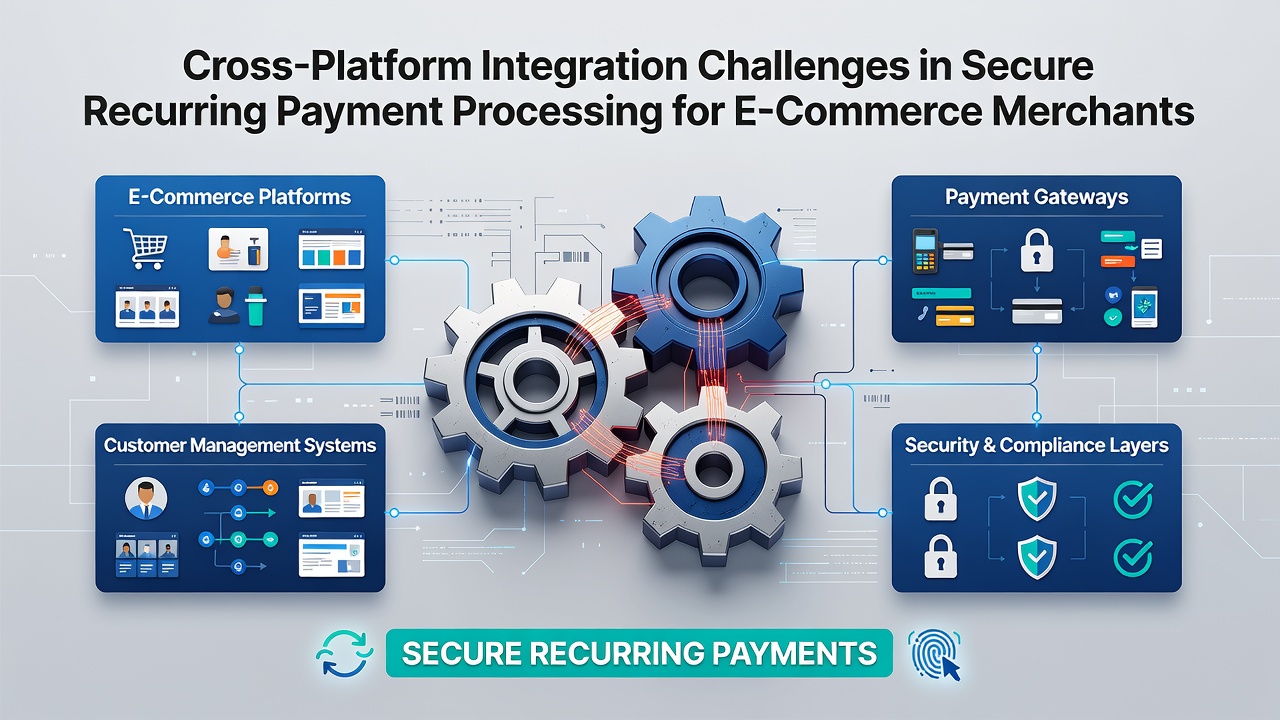
Cross-platform integration challenges arise when e-commerce merchants attempt to connect recurring payment systems across different software environments, operating systems, and third-party services while maintaining security standards. These issues surface because platforms use varying data formats, authentication methods, and communication protocols that do not align automatically. Merchants must synchronize subscription billing cycles, customer authentication tokens, and transaction logs without exposing sensitive financial details during transfers.
Core Technical Barriers in Platform Alignment
Developers encounter mismatches in API structures when linking recurring payment engines to diverse storefronts and accounting tools. One common obstacle involves incompatible webhook formats that prevent real-time updates on failed charges or subscription renewals. Another stems from differing encryption standards that require custom middleware to translate between systems, which increases both latency and potential points of failure. Research from the European Central Bank on payment system interoperability shows that such format discrepancies contribute to higher error rates in automated billing sequences across European markets.
Database schema variations further complicate matters because one platform might store recurring schedule data in relational tables while another uses document-based storage. Synchronization scripts must reconcile these differences without duplicating entries or losing historical transaction records. Observers note that merchants operating on both cloud-hosted and on-premise solutions face additional hurdles when network firewalls block direct data exchanges required for token updates.
Security Protocols and Data Protection Requirements
Secure recurring payment processing demands consistent application of tokenization and encryption across every connected platform. When systems integrate, each endpoint must validate that tokens remain non-reversible and that encryption keys rotate according to established schedules. Discrepancies in key management practices between platforms can leave temporary windows where data travels without full protection. Figures from the PCI Security Standards Council indicate that integration gaps account for a measurable portion of reported incidents involving recurring transaction data in multi-vendor setups.
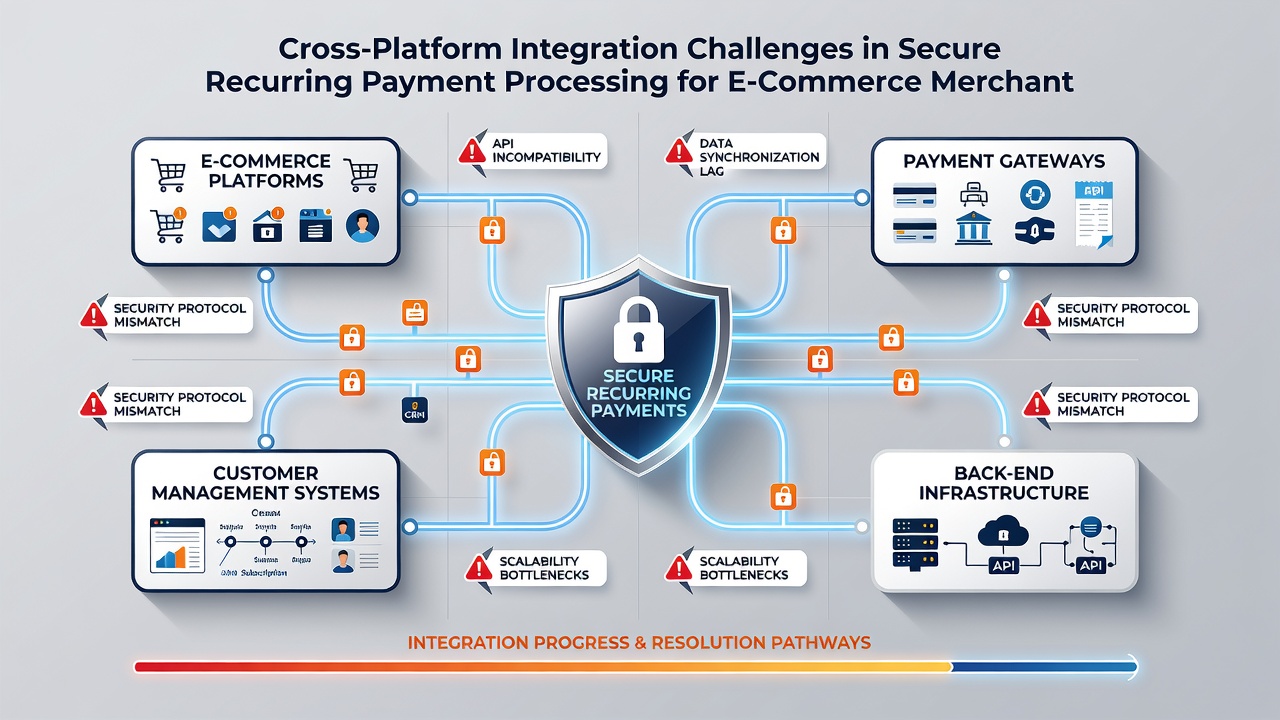
Authentication flows also require careful mapping because some platforms rely on OAuth while others use certificate-based verification. A mismatch forces merchants to maintain parallel credential stores, raising administrative overhead and the risk of outdated certificates. Data indicates that merchants who standardize on a single authentication layer before integration experience fewer interruptions in monthly billing runs.
Compliance Considerations Across Regions
Merchants handling recurring payments internationally must satisfy overlapping regulatory frameworks that govern data residency and consumer consent. European rules require explicit renewal notifications, whereas certain North American jurisdictions emphasize different disclosure timelines. Cross-platform tools must therefore embed region-specific logic without fragmenting the core billing engine. The Australian Payments Network has published guidance on multi-currency recurring transactions that highlights the need for unified audit trails when data crosses borders.
September 2026 updates to certain reporting standards have prompted merchants to adjust their logging practices so that transaction metadata remains traceable across all integrated environments. Failure to align these logs can delay compliance audits and trigger manual reviews that slow revenue collection.
Practical Examples from Current Deployments
One mid-sized subscription service provider discovered that its mobile app platform rejected recurring charge requests because the desktop billing system used different currency precision fields. Engineers resolved the issue by inserting a normalization layer that standardized decimal places before data reached the payment gateway. Another retailer connecting its point-of-sale system to an online subscription portal found that session timeouts differed enough to interrupt token refreshes, leading to declined renewals until the timeout values were synchronized.
These cases illustrate how small configuration differences cascade into operational disruptions when platforms operate independently. Teams that conduct thorough mapping of every data field and timing parameter before launch reduce the frequency of post-integration fixes.
Approaches That Reduce Integration Friction
Industry participants increasingly adopt middleware solutions designed specifically for payment orchestration. These tools translate between APIs while enforcing uniform security policies and maintaining a single source of truth for customer payment methods. Merchants also implement staged testing environments that replicate production data flows to surface compatibility problems early. Documentation from the Federal Reserve Bank of New York on payment system modernization underscores the value of such pre-deployment validation for recurring transaction reliability.
Regular protocol reviews help ensure that updates on one platform do not break connections elsewhere. Automated monitoring that tracks response times and error codes across all endpoints provides early warnings when an integration begins to degrade.
Conclusion
Cross-platform integration for secure recurring payments continues to require deliberate coordination of technical standards, security measures, and compliance rules. Merchants who map data flows, align authentication methods, and maintain consistent encryption practices encounter fewer disruptions in their billing cycles. Ongoing refinements in middleware and testing procedures support more reliable connections between diverse e-commerce environments while preserving the protections demanded by regulatory bodies worldwide.